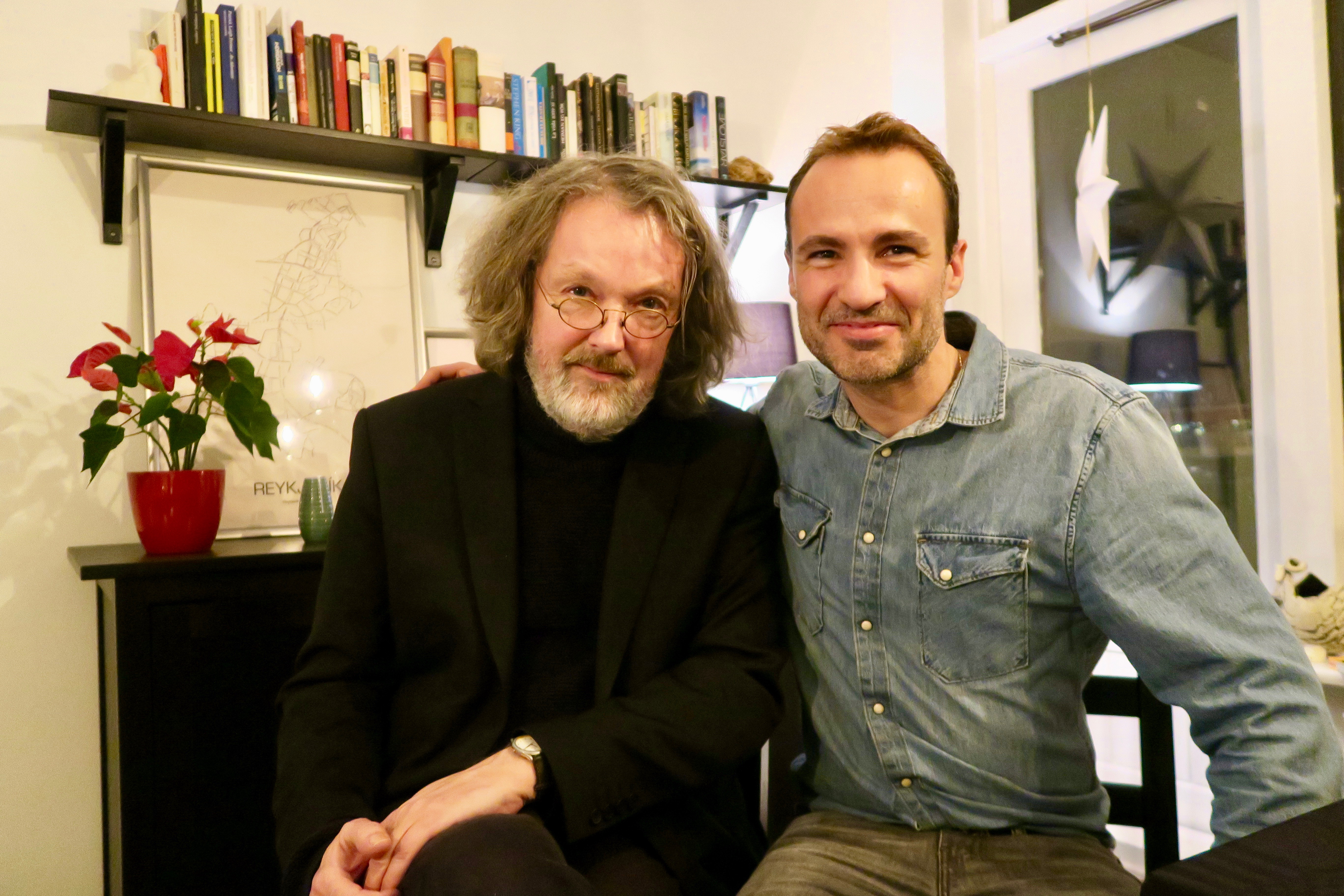
Interview writer Sjon and Jordi Pujola in National Museum
Interview writer Sjon is an article by Jordi Pujola, Spanish writer in Iceland, with the support of Icelandic Mountain Guides and Iceland Rovers (tailor trips Iceland and Greenland)
This blog is trying to put in contact Icelandic and Spanish cultures. Nowadays Sjón (Sigurjón Birgir Sigurðsson Reykjavik 27 Agust 1962) is one of the best ambassadors of the culture of Iceland
1. The shocking end of «The Blue Fox» is surrealist. Do you still use it on your works? Is the Surrealism still alive in Iceland (or the world)? Have it changed a lot?
As I started as a teenage surrealist and because Surrealism had a major influence on the development of my writer’s skills and thought processes it is still very much at the core of everything I write. So the art of making the impossible possible through juxtaposition of different realities and experiences is one of my main occupation as an author. Surrealism is alive and well in the art of many of Iceland’s best artists, writers and musicians of the younger generation. Its appeals differently to each new generation but it is always visible to my old surrealist inner eye. And I am glad it is still out there in all its rebellious beauty, both in Iceland and the world
Interview writer Sjon picture RUV
2. Hallgrímur Helgason (101 Reykjavik) told me he wanted to show the boreness of Reykjavik in the 80´s, but you had a lot of fun in this period. How was the atmosphere? What bands were involved in Medusa? Any scandalous anecdote?
I think what we were doing in Medúsa and the members of bands such as Purrkur Pillnikk was breaking out of the boredom of the 70’s. For us there was much fun in the 80’s as we were publishing books, organising concerts and performances, putting on art exhibitions and partying. I am sorry to hear Hallgrímur wasn’t having fun and that in itself is the biggest 80’s scandal I can think of right now
Interview writer Sjon head of Medusa Movement Iceland
3. You have been a friend of Björk for many years. How is she out of the spotlight?
She is one of my oldest and dearest friends. Everyone has an old and dear friend, she is like that.
4. «The Blue Fox» was a worldwide bestseller with very good reviews. Did you start risking with new writing techniques because you didn’t want to become too conservative? Because you still are a bit anarchist?
For me every new project, whether it is a novel, play, libretto or screenplay, has to bring a new challenge with it. Otherwise I will feel I am working and for me work is the enemy of pleasure. Even if a new project would ask me to write in a conservative manner I actually might do that if I haven’t used that conservative manner before.
5. Your novel «Moonstone» shocks everyone again because the main character is a bohemian queer boy who makes his living having sex with strangers in the 20´s Reykjavik´s streets when the contagious Spanish Flu arrived in Iceland and Katla was erupting. Were you in contact to the LGTBQ movement to get more information? How strong is this group in Iceland? Any remarkable artists from it?
The strange thing about the reception of Moonstone in Iceland is that nobody was shocked. In Iceland it is the most loved book of all my books. People of age group stopped me in the street and in shops or at bust stations to thank me for it. So here it is read as a book about a resourceful teenager who is and outsider with a fertile imagination and love of the new art of cinema. I built the character on my teenage self and my queer friends. I was glad the book was well received by the LGBTQ community in Iceland. Their achievements for equal rights has been an inspiring lesson in human rights for the rest of us. Many of Iceland’s best talents are queer but as it is their brilliance as creators that defines them and not their place on the rainbow I will name no names.
6. As Laxness, you are constantly exploring new cultures, religions and social movements. Currently you are interested in the influence of the Al-Andalus in Iceland. The Arabic culture was for centuries in Spain. Can you reveal us any of your findings?
No, I am not ready to do it publicly yet. But there are already indications that the influence can be seen in some of Iceland’s national literary treasures, which would make them Germanic/Celtic/Andalusian and not simply Icelandic.
7. I was amazed by your rings. The eye, the anchor and the one with runic inscriptions. I bed they are magic or something like that. Please could you tell me something about them (if you like, you can send me a picture as well).
They all have some talismanic qualities. The eye is my third eye, a reference to my author’s name, an eye on the lookout for good ideas and staving off the bad ones. The anchor refers to the sailors and seamen in my ancestry, the need for a grounding even though it is not on dry land but on the sea floor as a metaphor for the subconscious mind. The third ring has two inscription in the «höfðaletur», a font designed by the sculptor Ríkharður Jónsson. The font is based on the wood carvings you would find in on Icelandic bed stands and dining utensils like «askur» of the past centuries. My ring says: SJÓN and ÍSLAND. I like it because it is heavy on the hand.
8. What is the most shocking thing for an Icelander when visiting Spain? What is your favorite place in Spain?
Nothing shocks me anymore but when I visited Barcelona in 1983 I was shocked by the fact that I was allowed to drink absinthe there. My antics after drinking it shocked the Spaniards which I now know where Catalans. I like many places in Spain and all for different reasons. As an example I can name Málaga I visited recently because it has a fresh cultural scene and you can see Africa from there.
9. What is the best of Iceland? What is your favorite area/place in Iceland? What is the worst?
The snow falling slowly like white butterflies.
The beach by Eyrarbakki where I write all my books.
The white snowflakes turning into icy slush that gets into your boots no matter what,
10. Do you prefer summer or winter (in Iceland)?
Neither. Of the four seasons I prefer the autumn.
11. What are your 3 favorite authors, movies and bands?
Mikhail Bulgakov, the Russian author of «The Master and Margarita».
Bruno Schulz the Polish author of «The Street of Crocodiles».
Italo Calvino the Italian author of «Invisible Cities».
«Mary Poppins» directed by Robert Stevenson, based on the novels by P. L. Travers.
«L’Année dernière à Marienbad» directed by Alain Resnais, based on the novella «La invención de Morel» by Adolfo Bioy Casares.
«Zerkalo» by Andrei Tarkovsky.
Thor’s Hammer, an Icelandic garage band from the 60’s.
David Bowie, a galactic music alien that landed on Earth in the 70’s.
Arvo Pärt, an Estonian composer of works of higher consciousness.
12. What is your favorite restaurant and bar or coffee shop in Iceland? What is your favorite cocktail or drink?
Reykjavík’s first pizzeria Hornið. Their good quality hasn’t lagged since 1979 and their Napoletana is still the best I have tasted in the world. My favorite coffee shop is my neighborhood coffee shop «Kaffihús Vesturbæjar». I don’t drink alcohol so my favorite drink is the first coffee of the day.
Thank you Sjón you are a great example for the new generations of artists
Why after the crisis and the Viking revolution did Icelanders vote again the same politic party (right wing)?
It’s a difficult question. Somehow people seem to have respect for money and rich people, even though they have let them down so many times in the past. This is probably one of the mysteries of human behaviour. In the USA poor people thought a millionaire would save them, and here they always end up voting for Bjarni Ben, this most handsome and rich man in our politics, chairman of the ruling party. Even though he has by now a string of scandals around his neck, he always survives, people always vote for him. And now even the politicians of the left have a thing for him, for now they have formed a government with him. So I guess it will take a hundred more years to get some changes done here in Iceland, for example for us to get a new constitution.
You always say Björk changed Iceland. How a single singer from an unknown country in the remote Atlantic Ocean managed to do it? When and how did you meet her?
She put Iceland on the map, it was a big change, suddenly we were in the spotlight. We were not an isolated island anymore. So she did it by becoming very famous, this happened after she split with the Sugercubes and went solo. Her first album, “Debut, was a smash. She appeared as a fully mature artist. I had known her a bit from the eighties, it’s a small scene in Reykjavik, and you sort of knew all the people in the arts. One sensed that she had greatness in her, but when she came out with those albums it was just so much bigger than we had imagined.
You also met the painter Erró in Paris. What can you say about him? What are your favorite painters?
Favorite painters are maybe Goya, Velasquez and Munch, and then Otto Dix and Philip Guston from the 20th century. Yes, I met Erró a couple of times when I lived in Paris, where he has lived since the sixties. He’s a classical pop-painter, if you can say so. He’s a very charming, generous and grand man, he took us out to some fancy dinners a couple of times.
In general, tourists think Reykjavik is an idyllic city with cosy restaurants and coloured houses. 101 Reykjavik (1996) is an amazing novel and movie (also in Spanish) that shows up the dark side of the city. Is that real?
At least it shows the darkness and the coldness of Reykjavik, also it explores the boredom of living here, at least how it was back in the nineties. Hlynur Björn, the hero of the novel, complains a lot about his home city. And he makes fun of almost everything about it and all the people living there. I guess it was my outlet for a certain kind of frustration.
What is the most shocking thing for an Icelander when visiting Spain? What is your favorite place in Spain?
Favorite place has to be the Prado in Madrid, I could spend days in there. The most surprising thing about Spain was the landscape that was exotic and foreign even to me, and I who come from the country of crazy landscapes. For example the desert like the surroundings around Mojacar in Almería, with all its sand hills, was for me like being on the moon. In Madrid I was also very surprised to see how long people could party out in the streets in the weekends, they just never went home to sleep! There was noise outside my window until lunchtime, Sunday morning!
Interview writer Hallgrimur Helgason by Jordi Pujolà
What is the best of Iceland? What is your favorite area/place in Iceland? What is the worst?
The best thing about Iceland is the good society, the family-like feeling of it, the energy and originality of the people, the many creative scenes in culture, but also the clean air, the heating in the houses, all the warm water, the pools, not forgetting the beauty of the land. I’m also very proud of our culture, our sagas, the literary heritage and the enormous respect for poetry we have had throughout the ages. It’s really the saga island. The worst? How too many people get ahead in life by having the right connections, by knowing the right people, and not because of merit or talent. We have a lot of corruption that people don’t see as corruption, only a common sense behaviour and being “a good friend”. The weather can also be really bad, for long periods of time.
Do you prefer summer or winter (in Iceland)?
Summer of course. The light is on 24/7 and the weather is (usually) nicer. You feel the power of the sunlight that fills you with energy and faith. There is nothing like a summer night in July up north, walking home from a joyful dinner party, around midnight, with your small kids on your shoulders and the sun shining from the ocean ridge.
What are your 3 favorite authors, movies and bands?
Shakespeare has to be no. 1. I have translated two of his plays, and been very much influenced by him throughout my career. Then Tolstoy and Laxness maybe. Kim Leine is also good. Bands… well, I am not really in to rock, more of a hip hop guy, more into black than white music. Favorites in that field were maybe the old eighties masters Prince and Michael Jackson. Later came Eminem, and now I’m open to all the latest that my kids are listening to in the car, Beyoncé, Drake, Lamar. Movies… No.1 is Amadeus by Milos Forman. There is just something about it, it manages to capture genius, and that is no small feat. All Fellini was a real university for me. I also used to love Jim Carey and his movies, not least “Man on the Moon”, also by Milos Forman. I then still remember a rather unknown movie I saw in Paris back in the day, “Assia and the Hen with the Golden Eggs” (1994) by Russian director Andrei Konchalovsky. This was a truly great film about the chaos of life in Russia.
What is your favorite restaurant and bar or coffee shop in Iceland?
Sel Guesthouse in the south part of Iceland.
What is your favorite cocktail or drink?
A gran reserva Rioja red and white from the Douro valley in Portugal
1. Is Iceland a dream land? What is the best of Iceland? What is your favorite area/place in
Iceland?
Well Iceland is a Dreamland in many ways. Best is culture and language and landscape. Worst is weather. Favorite place is a secret spot in the Highlands.
2. Nowadays we are not used to governments planning long term projects for the benefit of the population, they don´t want other politicians to take the credit for their job. But according to the great book, movie and documentary Dream Land, in the 30´s there was a government that planned a new system to provide Icelanders hot water and heating (channelling the geothermal hot water that runs under the ground) for a much cheaper price (economical and environmental) than coal. The project was risky and expensive but still makes life easier to its inhabitants in this isolated island of the Atlantic Ocean. Do Icelanders remember this achievement or just take it for granted? Who is/are the hero/es of this story?
I think we take it for granted. Almost everyone lives within one two km from the next heated outdoor swimming pool. If the weather is bad in January you can go swimming with the kids.
The first farm was heated with geothermal water in 1908, in 1926 the Prime Minister Jón Þorláksson spoke about the potential of heating the whole town, the prime drive was to save money as we imported all the coal. The Reykjavík heating system was developed in the 1930s without real comparison abroad, they had to invent quite a lot of the technology and and it operated from 1940 and in the 1960s.
3. Why a rich country as Iceland has still aluminium factories? Would you get rid of them if you were president or first minister?
Iceland produces almost 3% of the aluminium in the world. They come here for cheap energy but there is quite some CO2 coming from the factories. They should be phased out in the coming years but they use 90% of the energy produced in Iceland so it would be difficult to shut them down.
4. Reykjavik is a beauty city surrounded but nature and unspoiled landscape, but very soon to see Hallgrimskirkja from everywhere will not be possible because the insane quantity of cranes. What do you think about this overbuilding of high blocks and hotels?
The building boom has some negative affects, they are building too high and not very beautiful buildings down town around the harbour. I have taken a few fights about preserving old houses and the old charm of Reykavík, also taken part in some competitions with architects, hoping to make more interesting houses.
It is hard to say, as a child I preferred winter. I love skiing so summer was less fun. That is an important survival element I think, to love the winter in Iceland. November is most difficult. January, February is best for writing.
6. What is your favorite restaurant and bar or coffee shop in Iceland?
It is most fun to go out with friends to Snaps, the food is fine but you always meet some friends and end up at an other table than you started.
7. What is the most shocking thing for an Icelander when visiting Spain? What
is your favorite place in Spain?
I have regretfully only once been to Barcelona so maybe I have never been to Spain if things go further into separation. For some strange reason I have been 12 times to Italy but only once to Spain. I intend to go more often and explore. I really love Barcelona.
8. What is your favorite cocktail or drink?
I am not a big drinker, don’t even drink beer or alcohol more than once or twice every month.
But the last drink was expresso-martini, whisky sour and then perhaps some good local house been like Einstök.
9. What are your 3 favorite authors?
Traditionally Kurt Vonnegut, Bulgakov and Orwell. Icelandic: Laxness, Gyrðir and Kristín Ómarsdóttir
10. What are your 3 favorite movies? and bands?
Icelandic movies: Hjartasteinn, Sódóma Reykjavík and Rokk í Reykjavík
I had over Arni Thorarinsson, one of the best writers and journalists of Iceland, and asked these questions while having some of my cocktails
1. What is the best of Iceland? And in Spain?
«The best about Iceland for me is that this is where most of my family lives, this is where I was born and raised and got to know my friends. It is a country which gave me the opportunities to do what I wanted with my life, to work in journalism in all kinds of media and then, later, to write books and screenplays. And it gave me my favourite language to work with – Icelandic. Of course, the nature and the landscape is a perfect framework for our little society, which on the other hand has and always will have some of the problems of small societies, including and, perhaps especially, political ones.
When I was growing up in the fifties and sixties Iceland was becoming less isolated, after decades and centuries of poverty and colonialism. Ordinary people were starting to travel abroad for business, study and vacation. It was in the sixties and seventies that Spain became our favourite vacation destination.
Why?
Because it was warm and sunny and affordable. So, after university in England and becoming a full-time journalist I had money to go on vacation once a year and the Costa del Sol and Costa Brava were the choices. Even though these were typical tourist trips we got to know a completely different culture, and during one of them I went for a day to Barcelona. I was totally fascinated by the city. But it wasn’t until the mid-nineties that I started to go there regularly for longer periods and it so happened that I wrote most of my first five crime novels there. I have so many fond memories of my stay in Barcelona, the great people, the culture, the climate, and, of course, the food and wine! So, setting aside the current political conflicts about Catalunya, I have to say, the best about Spain for me is Barcelona.»
2. What is your favourite area/place in Iceland? And in Spain?
«My favourite place in Iceland, in spite of everything else, has to be Reykjavík, where I live and work. But there are many spectacular areas around the country, in the west, north, east and south. If I had to pick one favourite I think it would be the north-west fjords, where one of my novels takes place in the small town of Ísafjörður.
«My favourite place in Barcelona is the view from the balcony in the apartment we rented in Calle Londres.»
Arni Thorarinsson interview English by the Spanish writer Jordi Pujolà
3. Do you prefer summer or winter (in Iceland)?
«I like both the darkness and the cold of winter and the light and the, slightly, warmer time of summer. One is not complete without the other.»
4. What is your favourite restaurant in Iceland? And in Spain?
«My favourite restaurant in Reykjavík, which was also my favourite bar, closed last year. It was called Café Rosenberg and offered good food and good live music at affordable prices. But now it’s gone and I haven’t found a substitute. I feel like a homeless person in the nightlife.
In Barcelona we had a favourite restaurant, Tragaluz, and bar, Parnasse, which have also closed. Why do things have to change?»
5. What is the most shocking thing for an Icelander when visiting Spain?
«I can’t remember anything shocking, except maybe the pickpockets!»
6. Do you use computer or typewriter?
«Although I’m old-fashioned and don’t have a smartphone or a credit card I do use a computer.»
7. Are you an A (morning) person or B (night) person?
«Definitely a B person, even a C person or a D person …»
8. What are your 3 favourite authors?
«The classic Icelandic author and Nobel-prize winner Halldór Laxness, the American crime novelist Raymond Chandler and the Swedish novelist Henning Mankell.»
9. What are your 3 favourite movies?
«Chinatown by Roman Polanski, Sunset Boulevard by Billy Wilder and Vertigo by Alfred Hitchcock. Honourable mention to the Icelandic Oscar-nominated Children of Nature by Friðrik Þór Friðriksson.»
10. What are your favourite bands?
«The Beatles, The Animals and The Kings.»
11. Do Icelander writers get a monthly salary from the government?
«No, not unless they are lucky. They can apply for financial support from the Literature Fond, project by project. A committee then decides whether they get a monthly grant for a few months to up to a year. There’s much more demand than supply.»
Cuando me trasladé a Islandia, perdí la confianza en mí mismo. Mi edad, la oscuridad, el clima, la comida y el idioma fueron los detonantes. A veces me encontraba en la calle rodeado de gente parloteando en una lengua ininteligible y despertaba como de un sueño y me decía: «Qué diablos hago aquí». A lo otro te acabas acostumbrando. Pero juro que en España era una persona normal; aunque, tal vez, vi el asesinato de Kennedy demasiadas veces. En cambio, en Islandia, me fui aislando y mis relaciones sociales se redujeron al núcleo familiar. Me sentía ridículo sonriendo porque, en realidad, no me enteraba de lo que decían. Mientras tanto, hablaba solo y me fijaba en cómo caía la nieve por la ventana, el viento partía los árboles en dos y el agua que bajaba del tejado se congelaba. Podía haber escrito una novela o planeado un crimen perfecto.
El dia que perdi la confianza en mi mismo
Encontré empleo en una cadena de montaje, nada que ver con el trabajo bien remunerado que tenía en España; sin embargo, este era el peaje que tenía que pagar por el cambio. Había caído en la trampa de mi esposa: «Yo he vivido muchos años en España. ¿Es que no te atreves a probar en mi país? Te sentará bien, ya verás. Abrirás tu mente».
Mis hijos adoptaron el apellido islandés de su madre porque decían que así se sentían más integrados en la escuela. Todo empezó con eso. A mi mujer no le parecía bien nada de lo que hacía o decía. Ni tan siquiera mi ropa o mi peinado. Claro, a partir de los cuarenta comienzas a quedarte descapotado, te salen pelos en las orejas, pierdes visión, audición, etc.
Me fui hundiendo poco a poco y en silencio. Yo no decía nada. Pensaba que en cualquier momento cambiarían las cosas. En la televisión no paraban de repetir que los inmigrantes tenían que aprender islandés. En consecuencia, me apunté a un curso. De todos los alumnos, yo me sentía el más estúpido. La mayoría eran más jóvenes y parecían entender los ejercicios a la primera. En la fábrica me pasaba lo mismo. Los chavales me pasaban por encima.
Ir a trabajar o estudiar islandés me daba una pereza terrible. El olor a pescado me mataba y la gramática islandesa me asesinaba. Se lo dije a un anciano que había vivido muchos años en España y lo veía, de tanto en tanto, en la cafetería y me contestó: «Aunque no lo creas, cuando trabajas en todo eso que no te interesa, en realidad estás trabajando por lo que más quieres porque todo está conectado. Así que olvídate de dar un palo al banco». «Sí, es verdad. Una vez, en un supermercado de Barcelona, me reí de un árabe porque utilizaba a su hijo, de seis años, de intérprete con la cajera y después me ha pasado a mí», le confesé apurando la taza de café. Dios, bebía tanto café que me temblaba la mano.
Oía muchos rumores: gente en la misma situación que la mía; no lo había podido soportar y había regresado a España; pero este no era mi caso. ¡Para nada! Sufría, pero apretaba los dientes: «Ya llegará mi momento», me decía. En definitiva, todos los caminos conducían a aprender islandés. Si lo lograba, conseguiría un empleo mejor, entendería lo que decía mi familia política y amigos y, por fin, me integraría.
Sin embargo, por mucho que me esforzaba: apuntaba frases en las paredes del techo para verlas antes de ir a dormir, escuchaba programas de radio que solamente hablaban del tiempo y las ovejas, leía el diario intentando prestar atención a los textos en lugar de a las fotos, etc. no entendía nada. Cuando me hablaban, las palabras salían al instante de mi cerebro como agua de un escurridor; no retenía nada. «Este yerno que me ha tocado es tonto», creo que dijo una vez mi suegro negando con la cabeza. Me dejaban ya por imposible. Entonces sucedió.
Estaba en unos grandes almacenes, sonaba la canción Imagine de John Lennon por los altavoces y vi al presidente del gobierno con su mujer, comprando una bajera. Aquí en Islandia los políticos no llevan guardaespaldas. Yo iba a darle un navajazo. Para que me metieran en la cárcel, hacerme famoso y todo eso. Si bien, cuando estaba a pocos metros, otro tipo se me adelantó. Saltó sobre su espalda y se le aferró al cuello para estrangularlo. El presidente era un tipo alto y fornido, pero ya con el pelo blanco y se puso colorado ante la estupefacción de su esposa y la gente que estaba en la tienda. Nadie se movía. Había llegado mi momento. Llevaba el cuchillo en el bolsillo. Lo saqué y se lo clavé en la nalga al asaltante. Dio un respingo y gritó. Soltó al presidente y se me quedó mirando como diciendo: «Me has jodido el día». Así pues, le di un puñetazo, cayó al suelo y todo el mundo hizo un círculo alrededor nuestro; pero él se quedó tendido de espaldas con la faca como una jeringuilla y una mancha de sangre. Ya no se movió. «Un inmigrante salva la vida del presidente», esto es lo que dijeron todos los diarios en primera página y mi foto en medio.
Así fue como recuperé la confianza en mí mismo. El presidente me preguntó a qué me dedicaba en España. Yo le dije que era economista. Me fichó para su gabinete. El idioma no era ningún impedimento porque todos hablaban inglés. Mis hijos se volvieron a poner mi apellido, mi mujer me escuchaba y me veía más guapo. Entonces, alguien empezó a hablarme en islandés y, de repente, lo entendía todo.
Before moving to Reykjavik, I was a real estate broker in Barcelona. I was tired and needed a change so I quit and became a professional writer in Iceland. I published my first novel with Camelot titled We Need a Change: The Dream of Iceland one year later. I have never regretted my career change, but I still like checking out housingmarkets. Based on my experience, I conclude that the housing bubble is repeating in Iceland.
Housing Bubble Iceland: What is the future of Iceland?
The current housing bubble in both rentals and sales is caused by two issues. First, 1,3 million tourists are expected to visit Iceland this year and the prospects are upwards. As a consequence, investors have started greedily buying buildings and flats to rent them to the tourists. However, Iceland, with a current population of 335,000 inhabitants, can’t hold this progression (3 million tourists in 3 years?), and tourism will stagnate very soon if the government doesn’t plan it carefully and invest money in the sector. Capital controls are the second factor. After the severe economic recession in Iceland and collapse of the national currency, the parliament, as a protective measure, limited drastically sales of Icelandic Króna. That means international investors can’t take their money out. Instead, they must the only way of buy Icelandic government bonds or real estate properties to realize their profits. So prices have continued to rise.
As happened in Barcelona, the real estate bubble can last for several years without apparently damaging the wider economy since the real estate market itself benefits from the bubble. During economic growth, harmful housing bubble effects are not perceived, quite the contrary, it produces a false sense of wealth that, in many cases, encourages private investors to take on more debt and encourages credit expansion by the banks which also increases inflation. On the other hand, during recession, enterprise’s profits fall, capital flow decreases and unemployment rockets. As a consequence, banks no longer lend money, companies and private owners are not able to pay their loans and prices collapse. The bubble implodes.
Housing Bubble Iceland: Real Estate, Tourism and capital controls
Although the housing bubble is inevitable, there are remedies. Promoting more social buildings to rent them out in every neighbourhood (in order to not create ghettos) at subsidised prices is one such remedy. People who live in Iceland search for affordable housing. More subsidies would open up this market and cause all prices to fall. Besides that, this policy would connect with the original Nordic socialism again. Strictly regulation of tourist services is another remedy. All kind of accommodation should pay taxes and pass quality controls.
Housing Bubble Iceland: What is the future of the economy in Iceland?
The question is to know the impact of the Icelandic Króna at the moment the capital controls disappear. The good news is the government is trying to do it gradually. However, when Icelandic Króna will be on the open market, it likely will be attacked by vulture funds. An isolated currency of a country with an economy in recovery as Iceland is much more vulnerable than those formed by an alliance of states. Nevertheless, I am optimistic because the Icelandic economy has enough resources such as energy, fish and tourism to stabilize it and avoid disaster.
BARCELONA Jordi Pujolà er katalónskur rithöfundur sem hefur búið á Íslandi frá sumrinu 2013. Hann starfaði sem fasteignasali í Barcelona þegar hann ákvað að láta drauminn rætast um að gerast rithöfundur
Updated info 18th October 2018
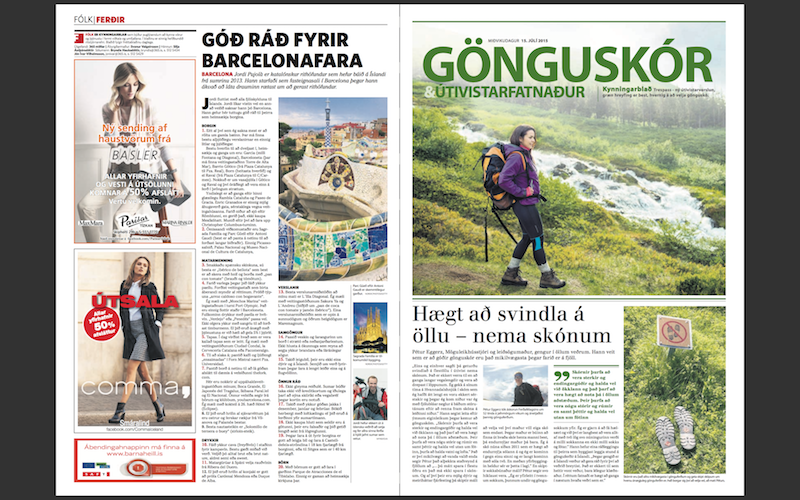
Góð ráð fyrir Barcelona fara, Fréttablaðið 15/7/2015
GÓÐ RÁÐ FYRIR BARCELONA FARA
Jordi fluttist með alla fjölskylduna til Íslands. Jordi líkar vistin vel en annað veifið saknar hann þó Barcelona. Hann gefur her tuttugu goð rað til þeirra sem heimsækja borgina.
1. Eitt af því sem eg sakna mest er að rölta um gamla bæinn. Þar má finna bestu alþjóðlegu verslanirnar en einnig litlar og þjóðlegar.
Bestu hverfin til að dveljast í, heimsækja og ganga um eru: Gracia (milli Fontana og Diagonal), Barceloneta (þar má finna veitingastaðinn Torre de Alta Mar), Barrio Gotico (frá Plaza Catalunya til Pza. Real), Born (heitasta hverfið) og el Raval (frá Plaza Catalunya til C/Carmen). Nokkuð er um vasaþjófa í Gotico og Raval og því óraðlegt að vera einn á ferð í þröngum strætum.
Yndislegt er að ganga eftir hinni glæsilegu Rambla Catalunya og Paseo de Gracia. Enric Granados er einnig mjög áhugaverð gata, sérstaklega vegna veitingahúsanna. Farið niður að sjó eftir Römblunni, en gerið það, ekki kaupa Mexíkóhatt. Munið eftir því að fara upp Christopher Columbus-turninn.
2. Ómissandi viðkomustaðir eru Sagrada Familiaog Parc Guell eftir Antoni Gaudi (best er að panta á netinu til að forðast langar biðraðir). Einnig Picasso– safnið, Palau Nacional og Museo Nacional de Cultura de Catalunya.
MATARMENNING
3. Smakkaðu spænskuskinkuna, sú besta er „iberico de bellota“ sem best er að skera með hníf og borða með „pan con tomate“ (brauði og tómötum).
4. Farið varlega þegar þið fáið ykkur paellu. Forðist veitingastaði sem birta á berandi myndir af réttinum. Prófið týpuna „arroz caldoso con bogavante“.
Ég mæli með „Monchos Marina“ veitingastaðnum í turni Port Olympic. Það eru einnig flottir staðir í Barceloneta. Fullkominn drykkur með paella er hvít- vín „Verdejo“ eða „Penedes“ passa vel. Ekki ofgera ykkur með sangríu til að forðast timburmenn. Ef þið eruð ánægð með þjónustuna er við hæfi að gefa 5% í þjórfé.
8. Ef þið eruð hrifin af sjávarréttum þá eru ostrur og ferskar rækjur frá Vilanova og Palamos bestar.
9. Besta nautasteikin er „Solomillo de ternera o buey“ (sirloin-steik).
10. Fáið ykkur cava (freyðivín) í staðinn fyrir kampavín. Bestu gæði miðað við verð. Veljið þó alltaf brut eða brut nature, aldrei semi eða sweet.
11. Matargúrúar á Spani velja rauðavínin frá Ribera del Duero.
12. Ef þið eruð hrifin af konjaki er gott að prófa Cardenal Mendoza eða Duque de Alba.
VERSLANIR
13. Besta verslunarmiðstöðin að mínu mati er L ́Illa Diagonal. Ég mæli með veitingastoðunum Sakura Ya og L´Andreu (biðjið um „pan de coca con tomate y jamon iberico“). Eina verslunarmiðstoðin sem er opin á sunnudögum og öðrum helgidögum er Maremagnum.
La Roca Village a lot of outlets in the same area, open almost everyday including Sundays from 10h to 21h, out of Barcelona (40 min), you can take the bus every hour from 9 h. at Passeig de Gràcia 6
RELAX
Aire de Barcelona: warm swimming pool, massages and Julio Cesar style
SAMGÖNGUR
14. Passið veskin og farangurinn um borð í strætó eða neðanjarðarlestum. Ekki hlusta á ókunnuga sem reyna að segja ykkur brandara eða fáránlegar sögur.
15. Takið leigubíl, þeir eru ekki eins dýrir og á Íslandi. Semjið um verð fyrir- fram þegar fara á lengri leiðir eins og á flugvöllinn.
ONNUR RÁÐ
16. Ekki gleyma reiðufé. Sumar búðir taka ekki við kreditkortum og iðulega þarf að sýna skilríki eða vegabréf þegar kortin eru notuð.
17. Takið með ykkur góðan jakka í desember, janúar og febrúar. Bókið herbergi með loftkælingu ef þið eruð á ferðinni yfir sumartímann.
18. Ekki kaupa hluti sem seldir eru á götunni, þeir eru falsaðir og þið getið fengið sekt frá lögreglunni.
19. Þegar fara á út fyrir borgina er gott að leigja bíl og fara á Castelldefels ströndina í 18 km fjarlægð frá borginni, eða til Sitges sem er í 40 km fjarlægð.
BÖRN
20. Með börnum er gott að fara í garðinn Parque de Atracciones de el Tibidabo. Einnig er gaman að heimsækja kirkjuna þar. Eða Camp Nou F.C. Barcelona (Barça).
Wine list Iceland. The top wine in Iceland according price and quality, by the Spanish writer Jordi Pujolà
Wine list Iceland, by the Spanish writer Jordi Pujolà
Don´t you know what wine to buy for a special occasion? Do you want to drink an excellent wine without spending a fortune? Skál!
About red wine: No chip wine is good wine, no very expensive one is worth it.
Currently best price quality in Vínbúðin is Campo Viejo Gran Reserva 2012, 2999 Kr.
I have been asked many times for my favouritewine list Iceland and finally I made this:
Wine list Iceland
As all who live in Iceland, I know wine is expensive and making a good choice is more important than in other countries where alcohol taxes are lower. Everyone can buy the most expensive wine in Vínbúðin or a restaurant, but this is not the point.
This is my top tenwine list Iceland in Vínbúðin according price and quality.
I recommend beer with indian, mexican, pizza and sushi. All the Icelandic beer is very good because the pure water and there are many kinds.
Some tips and difference between young, crianza, reserva and gran reserva wines:
Remember every wine has a proper temperature to drink. Please check out the label and use your fridge according to it. White (8-12Cº), red (14-18Cº). The oldest the warmest.
Keep your wine always in the fridge and put the cork on again. It can be in good condition up to one week. So don´t hesitate if feel like having just one glass. Remember that a good meal deserves a good wine.
If the wine is old (Reserve, big reserve), please open the bottle 1 hour before drink it (at least) and use a decanter if you have one. Old wine needs to breath.
Reserve or big reserve can be kept for a long time (watch out for temperature and humidity) and even improve in the bottle.
Good wine is healthy and bad wine is poisonous.
Don´t buy cheap alcohol for doing cocktails. You will save in health and hangovers.
If you compare champagne and cava, cognac or brandi, please compare prices as well. For example, don´t compare a bottle of champagne of 10.000 kr. with a cava´s of 2000 kr. Please, look for a cava of the same price.
If you are sensitive to headache from wine, drink only one glass with the main course (never with empty stomach) and drink water as well.
Drink, smoke and eat (moderately) because life is short. Skál!
Mariposa negra: relato de Jordi Pujolà, escritor español Islandia
Mariposa negra, un relato de Jordi Pujolà.
Mariposa negra
Ayer fue un día extraño. Primero lucía el sol, apenas se veían nubes. Luego se fundió. Acababa de escribir en mi blog que me encontraba feliz en Islandia; me sentía poeta y soñador. Entonces, de repente, zas, algo me golpeó. Sucedió tras el envite de la mariposa negra. Todavía me estremezco al recordarlo. Aunque tal vez lo mereciera. Por aquella época, a pesar de no encontrar trabajo y ser un estudiante, tenía el ego por las nubes y llevaba una vida bohemia y de perdición.
Mariposa negra: relato de Jordi Pujolà, escritor español Islandia
Yo no sabía que había mariposas negras en Islandia. El caso es que me encontraba en el café en el que desayuno de vez en cuando y entró una mariposa negra por la ventana del tamaño de una mano. Giré mi taburete porque un hombre mayor con su jersey lopapeysa dio un grito ahogado y dejó caer su kleina (especie de rosquilla) aceitosa sobre la mesa. Hacía poco que los diarios habían anunciado que los inmigrantes habíamos traído una plaga de insectos y demás. Y yo soy un inmigrante, ¿qué más puedo decir?
De cualquier modo, no le di más importancia al incidente. Hay mucha gente que cree en los elfos y los enanos. Así que me volví hacia la barra. El desayuno es mi momento del día. Sin embargo, en el instante que levantaba la taza, antes de dar el primer trago a mi café con leche con la espiga blanca que me dedica la camarera en la superficie, la mariposa negra se posó sobre el borde de mi taza. Había tres tipos de tarta en el mostrador, a cada cual más apetecible, pero fue directamente hacia mí. ¡Dios!, estaba tan cerca que casi tocaba mi nariz. Pude observar sus patas, sus antenas y sus ojos totalmente negros. Más que una mariposa parecía una polilla, ¡una gran polilla! No sé cuánto tiempo aguantamos mirándonos fijamente; nuestro «Love Story».
Con todo, volvió a sonar el silbido de la rutilante máquina de café y se activó el murmullo de la clientela. El hombre del lopapeysa se levantó, pálido como la nieve que cubre Reykjavik en invierno, me miró de soslayo y salió; casi se lleva por delante la silla de una anciana que hacía ganchillo, aunque esto no viene al caso. La cuestión es que, mecachis en la mar, se rompió mi vínculo con la mariposa. Había sentido algo insólito: una especie de miedo, morbo y fascinación a la vez.
De cualquier modo, la mariposa salió volando, trazó la errática trayectoria que las caracteriza, y yo derramé el café sobre mi camisa, mi pantalón y, lo peor de todo, las botas de piel de serpiente que me había comprado en aquel extravagante viaje a Tijuana.
La atención de todos los presentes se volvió hacia mí —esto no lo puedo soportar—: la anciana que calcetaba, un chico con la camiseta de la selección islandesa y barba hasta el pecho, la camarera y unos turistas orientales con maletas de dos ruedas. Para colmo se había manchado mi libro de David Livingstone y el líquido se filtraba por la madera del mostrador. Estuve a punto de gritar un exabrupto en español, de los que soltábamos en la Legión. Por lo contrario, acudí a la técnica milenaria que me habían enseñado en el centro de desintoxicación y respiré y conté hasta diez y todo eso. No obstante, estaba consternado, esto tengo que admitirlo. Algo en el Universo, por decirlo de alguna manera, se había fisurado. Mientras me secaba con el trapo, que me pasó la camarera, comencé a sentir una premonición que se quedó atrapada en mi garganta como el amargor del café.
Al salir a la calle seguía sin poder quitarme la mariposa de la cabeza. Era elegante y delicada. Oh, no se trataba de una mariposa vulgar, de esto estaba convencido. De cualquier manera, todo fue muy rápido. Y lo que me pasó después fue todavía más misterioso.
Se nubló el cielo, se levantó un viento de los más desapacible y un rayo, que bajó del cielo, me alcanzó de pleno. Lo digo figuradamente, pero, juro que fue algo así.
Por lo que sigue, recibí un correo electrónico a mi teléfono móvil que me quitó dos años de vida de un soplo. Me flaqueaban las piernas, no podía caminar, casi ni respirar: me echaban del piso de alquiler subvencionado por la Universidad de Islandia y me quedaba, de repente, con mis dos hijos y mi esposa, en la calle. Los precios de los alquileres en Reykjavik, debido al auge del turismo y la restricción de capitales —había escrito un artículo sobre eso—, han formado una peligrosa burbuja inmobiliaria. Yo soy escritor, estudiante e inmigrante. ¡No puedo permitirme precios así!
Releí el correo electrónico y me decían que tenía que aprobar 40 créditos para mantener el apartamento. Yo solamente me había matriculado de 20 y, ¡Dios, los había aprobado! Tenía entendido que con esto era suficiente.
Bajando por Laugavegur, la calle principal del centro, un hombre anuncio disfrazado de Batman me dio un susto de muerte y sentí el impulso de abofetearle; si bien, volví a acudir a las técnicas de relajación y solventé mis problemas yendo a donar al banco de sangre. Eso aliviaría mis penas, al menos es lo que yo creía.
En el mostrador de la entrada rellené el típico formulario: se hacía todo tipo de preguntas menos si había estado en contacto con una mariposa negra. Así que seguí adelante. Una enfermera con una flor de lis tatuada en el brazo me dijo que la acompañara a un pequeño despacho. Cerré la puerta, me senté. Me tomó el pulso y me dijo que tenía la presión arterial por los cielos. Así que esperamos un rato y, cuando me bajó, salimos a una sala más grande. Había por lo menos diez camillas y olía a desinfectante. Me estiré en una y miré los fluorescentes del techo, de uno colgaba una araña negra. «Maldición», me dije. Tragué saliva, otra vez ese sabor amargo. «¿Qué brazo prefiere?», me preguntó la enfermera. «¿Se encuentra bien?». Estuve a punto de ponerme a llorar, de decirle que me iban a echar del piso y todo eso. Pero vi a los camioneros que había en las camillas de al lado y a las otras enfermeras, arriba y abajo por el suelo de linóleo, y consideré que no sería buena idea. Los camioneros venían porque después de donar sangre les invitaban a la merienda. De esto estaba seguro. «¿Qué brazo prefiere», insistió. «Bueno, me da un poco lo mismo», respondí, y me acordé de aquella vez que me hicieron el Test de Rorschach y no me contrataron. En las diez láminas veía lo mismo: ¡Una mariposa negra! No sé por qué, quizá pequé de infantil. Miré los zapatos blancos con agujeritos de la enfermera, me apreté los ojos y tendí el brazo izquierdo.
Entonces, al poco rato, entró la mariposa negra por la ventana del otro extremo, cruzó la estancia de más de cien metros cuadrados, generando gran expectación, y se posó sobre el brazo en el que tenía la aguja clavada. La sangre fluía a buen ritmo, al menos eso acababa de decirme la enfermera, que se quedó sin saber qué hacer ante la angustiosa escena. Aunque esto no era nuevo para mí.
«No haga nada, se lo ruego por favor. No la toque», le dije con ansiedad. Sé que el resto de gente nos miraba. Pero me daba igual.
Volví a mirar las antenas de la mariposa negra y las movió como si fueran pestañas y pudiera comprenderme. Era bonita, puedo jurarlo. Se reanudó nuestro romance, lo sentí. Le dije allí, delante de los presentes, que me librara de su maldición y me devolviera mi piso. Nunca lo había valorado antes.
Así pues, cuando el artilugio que va balanceando la bolsita de sangre se detuvo porque ya estaba llena, la mariposa, que parecía haber comprendido perfectamente mi situación, aleteó, hizo unos zig zags por la sala y se marchó de una forma muy elegante. Oh, sí, era una mariposa muy estilizada. Salió por la misma ventana que había entrado. Todo pasó muy rápido.
Sin saber por qué, me sentí aliviado y un poco ridículo a la vez, lo reconozco. Toda esta gente me miraba como si fuera un neurótico o algo así. Pero me daba lo mismo.
De nuevo en la calle, revisé mi correo electrónico en mi teléfono y con lágrimas en los ojos, abrí otro que decía que la notificación anterior había sido ¡un error! Di un grito y el salto del granjero. Era mayo y había vuelto a salir el sol.
Ahora, pasado un tiempo, cada vez que veo una mariposa, aunque no sea negra, recuerdo que la felicidad del hombre es tan bella y frágil como sus estilizadas alas. En cualquier momento pueden cambiar las cosas y este fue únicamente un aviso. Gracias, mariposa negra.
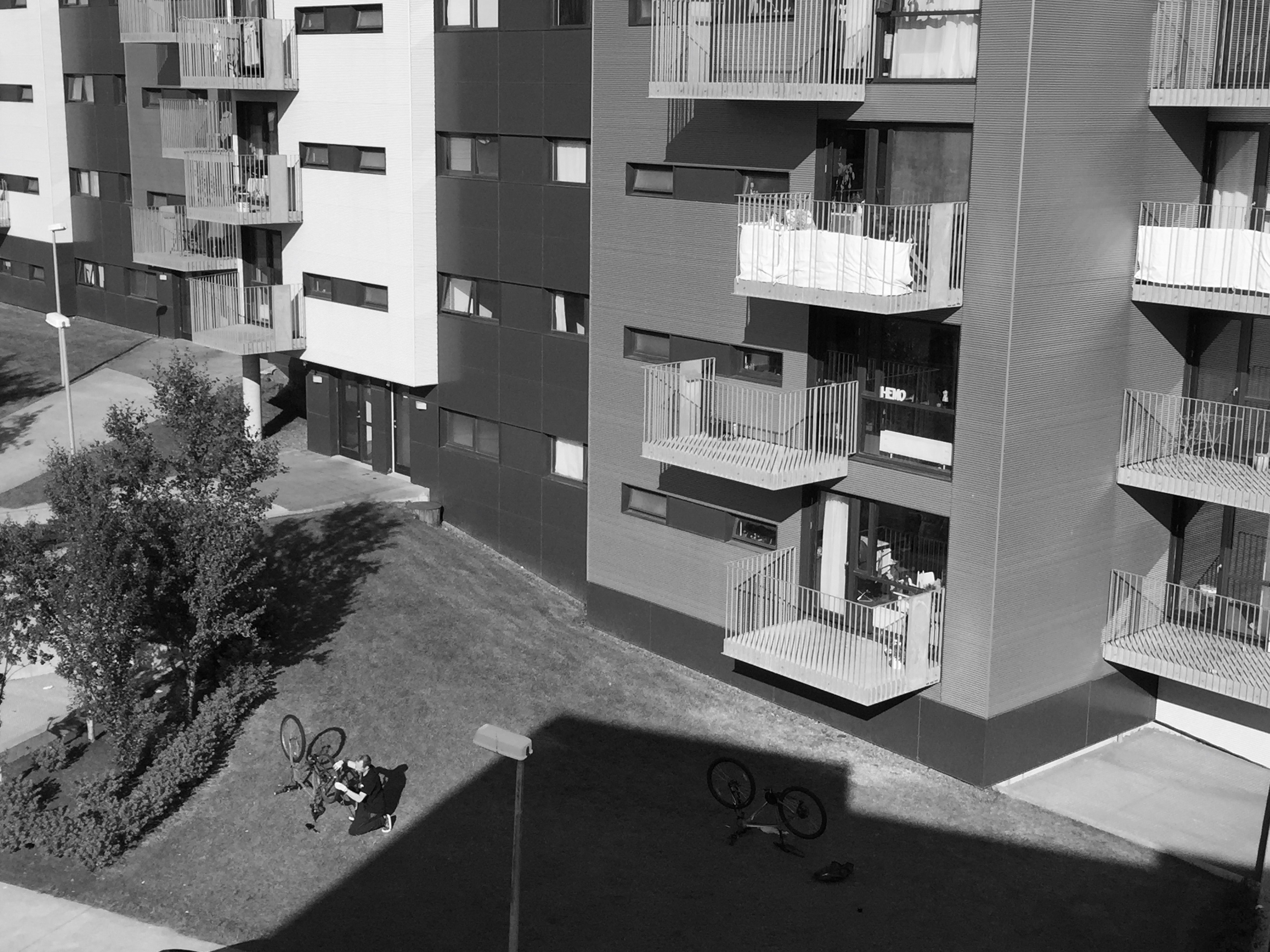
Biking Reykjavik is like dealing with life. Our lives are a kind of test that we can´t avoid.
Biking Reykjavik, Iceland.
The contradiction of the human being
The contradiction of man: always complaining about time passing so fast, but on the other hand, we don´t like testing our patience in any way. When someone asks us to wait a few days or a few weeks, we despair. What happened to the old pleasure of containment and waiting?
Life marks it´s own pace
We demand immediate results with minimal effort. But life marks its own pace. Everything involves a process and requires work: the seed becomes a tree, the stomach takes few minutes to warn the brain that it’s full, there are four seasons and to reach the summer we have to spend the winter, the diseases and the recoveries take time on showing up. As well as love, friendship and happiness must be earned every day. So we should copy life and not vice versa, as the planes copied birds or boats fishes. Nothing is immediate or aimless, even though we don’t notice it.
Life is just another test
But certainly there are so many things that we do not realize, as the rotation of Earth under our feet, that sometimes I close my eyes and think nothing outside really exists. All is a set that someone put on. The white clouds on the sky, the snow falling like cottons or the mechanic move of the sea. We don’t perceive the reality, only what our senses transmit to us. For example, the colors are the result of an optical illusion. There is only black –absence of light– and white –light–. That makes me suspect that life is a kind of a test.
Life is like biking Reykjavik
Life is like riding a bicycle in Reykjavik: before starting we have to plan the route, watch the sky, decide what clothes we are going to put on and pedaling. The easiest way is to get into a car, turn on the air conditioner or heater, turn on the radio and push the gas. Then we don’t notice the smell of the freshly cut grass, whether the wind is against or in favor (in Iceland almost always against) or the street goes up or down. In that regard, cycling is like training for the unavoidable problems of life.
Biking Reykjavik is like dealing with life. Our lives are a kind of test that we can´t avoid.
Nature and pure air
By the way, particularly in Iceland when riding the valley of Fossvogur (Reykjavik), listening to the birdsong from the trees a on the wet, feasting on worms and seeds, is a privilege. I spread their joy. Birds don’t fear bikes because they don’t consider them an enemy. This “summer” wild geese have been breeding. In the morning, the families walk in a row without breaking it even when getting into the lake; the baby birds have not developed the plumage yet. At night they shelter under their mother’s wings and the father becomes unusually aggressive against the minimal external threat.
Biking versus driving cars in Reykjavik
Is this not an invitation to merge with nature? In Iceland, as the weather, the colors change constantly, especially reflected on the sea. It’s not the same before the storm, dark blue, that when the sun rises and becomes greenish; or when it is raining or snowing. Sometimes the wind is so strong that when going down on a slope you feel the bike going back in reverse. At those moments, with the hail hitting my face, frozen fingertips and still several kilometers ahead, I wonder: «What the hell am I doing here«. In extreme conditions the same route would require to invest triple time; each pedal stroke is like a trace in a rock. But this gives you time to think and reconsider the importance of things that really matter. I know eventually that I will reach my destination. Besides that, it’s an excellent exercise for the mind, the spirit and the body.
The most important thing: Freedom
Another reason is freedom. Nothing like biking Reykjavik when the sun rises after a good snowfall and see the shiny black crows hover Reykjavik. Iceland is the country where the sun is always a caress, unlike in Spain where having a meal under the sun in summer is only for tourists wearing sandals with socks.