Categorías
Blog English

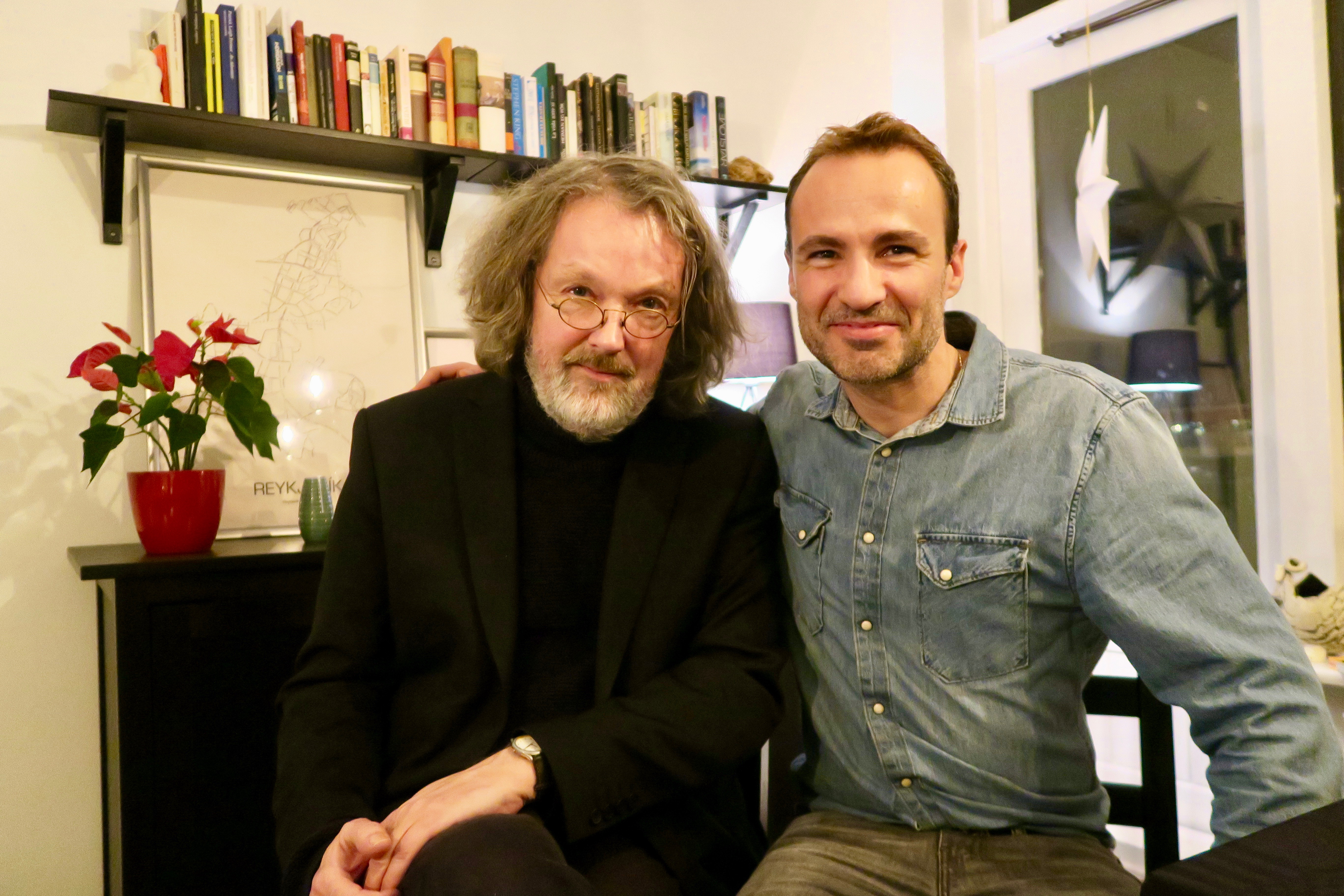
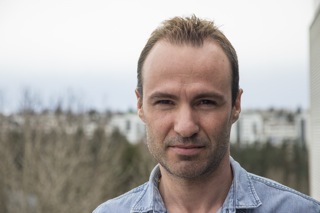
Interview writer Hallgrimur Helgason

Interview writer Hallgrimur Helgason is an article by Jordi Pujolà, Spanish writer in Iceland
with the support of Icelandic Mountain Guides, 15% of discount in all their excursions (see what you can do in Iceland)

The complete interview in Spanish

Don´t miss:

Interview writer Hallgrimur Helgason

«Living in Reykjavik in the 90´s was boring»

February 2018, Mr. Hallgrimur Helgason

Why after the crisis and the Viking revolution did Icelanders vote again the same politic party (right wing)?

It’s a difficult question. Somehow people seem to have respect for money and rich people, even though they have let them down so many times in the past. This is probably one of the mysteries of human behaviour. In the USA poor people thought a millionaire would save them, and here they always end up voting for Bjarni Ben, this most handsome and rich man in our politics, chairman of the ruling party. Even though he has by now a string of scandals around his neck, he always survives, people always vote for  him. And now even the politicians of the left have a thing for him, for now they have formed a government with him. So I guess it will take a hundred more years to get some changes done here in Iceland, for example for us to get a new constitution.

You always say Björk changed Iceland. How a single singer from an unknown country in the remote Atlantic Ocean managed to do it? When and how did you meet her?

She put Iceland on the map, it was a big change, suddenly we were in the spotlight. We were not an isolated island anymore. So she did it by becoming very famous, this happened after she split with the Sugercubes and went solo. Her first album, “Debut, was a smash. She appeared as a fully mature artist. I had known her a bit from the eighties, it’s a small scene in Reykjavik, and you sort of knew all the people in the arts. One sensed that she had greatness in her, but when she came out with those albums it was just so much bigger than we had imagined.

You also met the painter Erró in Paris. What can you say about him? What are your favorite painters?

Favorite painters are maybe Goya, Velasquez and Munch, and then Otto Dix and Philip Guston from the 20th century. Yes, I met Erró a couple of times when I lived in Paris, where he has lived since the sixties. He’s a classical pop-painter, if you can say so. He’s a very charming, generous and grand man, he took us out to some fancy dinners a couple of times.

In general, tourists think Reykjavik is an idyllic city with cosy restaurants and coloured houses. 101 Reykjavik (1996) is an amazing novel and movie (also in Spanish) that shows up the dark side of the city. Is that real?

At least it shows the darkness and the coldness of Reykjavik, also it explores the boredom of living here, at least how it was back in the nineties. Hlynur Björn, the hero of the novel, complains a lot about his home city. And he makes fun of almost everything about it and all the people living there. I guess it was my outlet for a certain kind of frustration.

What is the most shocking thing for an Icelander when visiting Spain? What is your favorite place in Spain?

Favorite place has to be the Prado in Madrid, I could spend days in there. The most surprising thing about Spain was the landscape that was exotic and foreign even to me, and I who come from the country of crazy landscapes. For example the desert like the surroundings around Mojacar in Almería, with all its sand hills, was for me like being on the moon. In Madrid I was also very surprised to see how long people could party out in the streets in the weekends, they just never went home to sleep! There was noise outside my window until lunchtime, Sunday morning!

Interview writer Hallgrimur Helgason passion for art
Interview writer Hallgrimur Helgason by Jordi Pujolà

What is the best of Iceland? What is your favorite area/place in Iceland? What is the worst?

The best thing about Iceland is the good society, the family-like feeling of it, the energy and originality of the people, the many creative scenes in culture, but also the clean air, the heating in the houses, all the warm water, the pools, not forgetting the beauty of the land. I’m also very proud of our culture, our sagas, the literary heritage and the enormous respect for poetry we have had throughout the ages. It’s really the saga island. The worst? How too many people get ahead in life by having the right connections, by knowing the right people, and not because of merit or talent. We have a lot of corruption that people don’t see as corruption, only a common sense behaviour and being “a good friend”. The weather can also be really bad, for long periods of time.

Do you prefer summer or winter (in Iceland)?

Summer of course. The light is on 24/7 and the weather is (usually) nicer. You feel the power of the sunlight that fills you with energy and faith. There is nothing like a summer night in July up north, walking home from a joyful dinner party, around midnight, with your small kids on your shoulders and the sun shining from the ocean ridge.

What are your 3 favorite authors, movies and bands?

Shakespeare has to be no. 1. I have translated two of his plays, and been very much influenced by him throughout my career. Then Tolstoy and Laxness maybe. Kim Leine is also good. Bands… well, I am not really in to rock, more of a hip hop guy, more into black than white music. Favorites in that field were maybe the old eighties masters Prince and Michael Jackson. Later came Eminem, and now I’m open to all the latest that my kids are listening to in the car, Beyoncé, Drake, Lamar. Movies… No.1 is Amadeus by Milos Forman. There is just something about it, it manages to capture genius, and that is no small feat. All Fellini was a real university for me. I also used to love Jim Carey and his movies, not least “Man on the Moon”, also by Milos Forman. I then still remember a rather unknown movie I saw in Paris back in the day, “Assia and the Hen with the Golden Eggs” (1994) by Russian director Andrei Konchalovsky. This was a truly great film about the chaos of life in Russia.

What is your favorite restaurant and bar or coffee shop in Iceland?

Sel Guesthouse in the south part of Iceland.

What is your favorite cocktail or drink?

A gran reserva Rioja red and white from the Douro valley in Portugal

Interview writer Hallgrimur Helgason is an article by Jordi Pujola, buy my books in Bóksala Studenta and Penninn (link)

Categorías
Blog English

Andri Magnason interview English

Andri Magnason interview English is an article by the Spanish writer in Iceland Jordi Pujolà, with the support of Icelandic Mountain Guides, 15% of discount in all their excursions (see what you can do in Iceland)
The complete interview in Spanish

Don´t miss:

Andri Magnason interview English

Andri Magnason interview English with Spanish author Jordi Pujola
Andri Magnason interview English by Jordi Pujola
1. Is Iceland a dream land? What is the best of Iceland? What is your favorite area/place in
Iceland?
Well Iceland is a Dreamland in many ways. Best is culture and language and landscape. Worst is weather. Favorite place is a secret spot in the Highlands.
2. Nowadays we are not used to governments planning long term projects for the benefit of the population, they don´t want other politicians to take the credit for their job. But according to the great book, movie and documentary Dream Land, in the 30´s there was a government that planned a new system to provide Icelanders hot water and heating (channelling the geothermal hot water that runs under the ground) for a much cheaper price (economical and environmental) than coal. The project was risky and expensive but still makes life easier to its inhabitants in this isolated island of the Atlantic Ocean. Do Icelanders remember this achievement or just take it for granted? Who is/are the hero/es of this story?
I think we take it for granted. Almost everyone lives within one two km from the next heated outdoor swimming pool. If the weather is bad in January you can go swimming with the kids.
The first farm was heated with geothermal water in 1908, in 1926 the Prime Minister Jón Þorláksson spoke about the potential of heating the whole town, the prime drive was to save money as we imported all the coal. The Reykjavík heating system was developed in the 1930s without real comparison abroad, they had to invent quite a lot of the technology and and it operated from 1940 and in the 1960s.
3. Why a rich country as Iceland has still aluminium factories? Would you get rid of them if you were president or first minister?
Iceland produces almost 3% of the aluminium in the world. They come here for cheap energy but there is quite some CO2 coming from the factories. They should be phased out in the coming years but they use 90% of the energy produced in Iceland so it would be difficult to shut them down.
4. Reykjavik is a beauty city surrounded but nature and unspoiled landscape, but very soon to see Hallgrimskirkja from everywhere will not be possible because the insane quantity of cranes. What do you think about this overbuilding of high blocks and hotels?
The building boom has some negative affects, they are building too high and not very beautiful buildings down town around the harbour. I have taken a few fights about preserving old houses and the old charm of Reykavík, also taken part in some competitions with architects, hoping to make more interesting houses.
Housing Bubble in Iceland (push)
5. Do you prefer summer or winter (in Iceland)?
It is hard to say, as a child I preferred winter. I love skiing so summer was less fun. That is an important survival element I think, to love the winter in Iceland. November is most difficult. January, February is best for writing.
6. What is your favorite restaurant and bar or coffee shop in Iceland?
It is most fun to go out with friends to Snaps, the food is fine but you always meet some friends and end up at an other table than you started.
7. What is the most shocking thing for an Icelander when visiting Spain? What
is your favorite place in Spain?
I have regretfully only once been to Barcelona so maybe I have never been to Spain if things go further into separation. For some strange reason I have been 12 times to Italy but only once to Spain. I intend to go more often and explore. I really love Barcelona.
8. What is your favorite cocktail or drink?
I am not a big drinker, don’t even drink beer or alcohol more than once or twice every month.
But the last drink was expresso-martini, whisky sour and then perhaps some good local house been like Einstök.
9. What are your 3 favorite authors?
Traditionally Kurt Vonnegut, Bulgakov and Orwell. Icelandic: Laxness, Gyrðir and Kristín Ómarsdóttir
10. What are your 3 favorite movies? and bands?
Icelandic movies: Hjartasteinn, Sódóma Reykjavík and Rokk í Reykjavík
Favorite bands: Múm, Aiya, Björk
Push to watch Dream Land movie free

[contact-form][contact-field label=»Nombre» type=»name» required=»true» /][contact-field label=»Correo electrónico» type=»email» required=»true» /][contact-field label=»Web» type=»url» /][contact-field label=»Mensaje» type=»textarea» /][/contact-form]

Categorías
Artículos y Relatos Blog English

Arni Thorarinsson interview English

Arni Thorarinsson interview English by the Spanish writer Jordi Pujolà

with the support of Icelandic Mountain Guides

Read the complete article on www.escritorislandia.com

Don´t miss:The 10 tips to go to Barcelona

Arni Thorarinsson interview English

I had over Arni Thorarinsson, one of the best writers and journalists of Iceland, and asked these questions while having some of my cocktails

1.       What is the best of Iceland? And in Spain?

«The best about Iceland for me is that this is where most of my family lives, this is where I was born and raised and got to know my friends. It is a country which gave me the opportunities to do what I wanted with my life, to work in journalism in all kinds of media and then, later, to write books and screenplays. And it gave me my favourite language to work with – Icelandic. Of course, the nature and the landscape is a perfect framework for our little society, which on the other hand has and always will have some of the problems of small societies, including and, perhaps especially, political ones.

When I was growing up in the fifties and sixties Iceland was becoming less isolated, after decades and centuries of poverty and colonialism. Ordinary people were starting to travel abroad for business, study and vacation. It was in the sixties and seventies that Spain became our favourite vacation destination.

Why?

Because it was warm and sunny and affordable. So, after university in England and becoming a full-time journalist I had money to go on vacation once a year and the Costa del Sol and Costa Brava were the choices.  Even though these were typical tourist trips we got to know a completely different culture, and during one of them I went for a day to Barcelona. I was totally fascinated by the city. But it wasn’t until the mid-nineties that I started to go there regularly for longer periods and it so happened that I wrote most of my first five crime novels there. I have so many fond memories  of my stay in Barcelona, the great people, the culture, the climate, and, of course, the food and wine! So, setting aside the current political conflicts about Catalunya, I have to say, the best about Spain for me is Barcelona.»

2.       What is your favourite area/place in Iceland? And in Spain?

«My favourite place in Iceland, in spite of everything else, has to be Reykjavík, where I live and work. But there are many spectacular areas around the country, in the west, north, east and south. If I had to pick one favourite I think it would be the north-west fjords, where one of my novels takes place in the small town of Ísafjörður.

«My favourite place in Barcelona is the view from the balcony in the apartment we rented in Calle Londres.»

Arni Thorarinsson interview English with Jordi Pujolà Spanish writer in Iceland
Arni Thorarinsson interview English by the Spanish writer Jordi Pujolà

3.       Do you prefer summer or winter (in Iceland)?

«I like both the darkness and the cold of winter and the light and the, slightly, warmer time of summer. One is not complete without the other.»

4.       What is your favourite restaurant in Iceland? And in Spain?

«My favourite restaurant in Reykjavík, which was also my favourite bar, closed last year. It was called Café Rosenberg and offered good food and good live music at affordable prices. But now it’s gone and I haven’t found a substitute. I feel like a homeless person in the nightlife.

In Barcelona we had a favourite restaurant, Tragaluz, and bar, Parnasse, which have also closed. Why do things have to change?»

5.       What is the most shocking thing for an Icelander when visiting Spain?

«I can’t remember anything shocking, except maybe the pickpockets!»

6. Do you use computer or typewriter?

«Although I’m old-fashioned and don’t have a smartphone or a credit card I do use a computer.»

7. Are you an A (morning) person or B (night) person?

«Definitely a B person, even a C person or a D person …»

8.       What are your 3 favourite authors?

«The classic Icelandic author and Nobel-prize winner Halldór Laxness, the American crime novelist Raymond Chandler and the Swedish novelist Henning Mankell.»

9.       What are your 3 favourite movies?

«Chinatown by Roman Polanski, Sunset Boulevard by Billy Wilder and Vertigo by Alfred Hitchcock. Honourable mention to the Icelandic Oscar-nominated Children of Nature by Friðrik Þór Friðriksson.»

10.       What are your favourite bands?

«The Beatles, The Animals and The Kings.»

11.   Do Icelander writers get a monthly salary from the government?

«No, not unless they are lucky. They can apply for financial support from the Literature Fond, project by project. A committee then decides whether they get a monthly grant for a few months to up to a year. There’s much more demand than supply.»

Arni Thorarinsson interview English by the Spanish writer Jordi Pujolà (20 January 2018)

Categorías
Blog English

Housing Bubble Iceland

Housing bubble Iceland, an article by Jordi Pujolà, Spanish writer in Iceland

(Accede al texto en español pulsando aquí)

Housing Bubble Iceland

Before moving to Reykjavik, I was a real estate broker in Barcelona. I was tired and needed a change so I quit and became a professional writer in Iceland. I published my first novel with Camelot titled We Need a Change: The Dream of Iceland one year later. I have never regretted my career change, but I still like checking out housing markets. Based on my experience, I conclude that the housing bubble is repeating in Iceland.

Housing Bubble Iceland and Reykjavik
Housing Bubble Iceland: What is the future of Iceland?

The current housing bubble in both rentals and sales is caused by two issues. First, 1,3 million tourists are expected to visit Iceland this year and the prospects are upwards. As a consequence, investors have started greedily buying buildings and flats to rent them to the tourists. However, Iceland, with a current population of 335,000 inhabitants, can’t hold this progression (3 million tourists in 3 years?),  and tourism will stagnate very soon if the government doesn’t plan it carefully and invest money in the sector. Capital controls are the second factor. After the severe economic recession in Iceland and collapse of the national currency, the parliament, as a protective measure, limited drastically sales of Icelandic Króna. That means international investors can’t take their money out. Instead, they must the only way of buy Icelandic government bonds or real estate properties to realize their profits. So prices have continued to rise.
As happened in Barcelona, the real estate bubble can last for several years without apparently damaging the wider economy since the real estate market itself benefits from the bubble. During economic growth, harmful housing bubble effects are not perceived, quite the contrary, it produces a false sense of wealth that, in many cases, encourages private investors to take on more debt and encourages credit expansion by the banks which also increases inflation. On the other hand, during recession, enterprise’s profits fall, capital flow decreases and unemployment rockets. As a consequence, banks no longer lend money, companies and private owners are not able to pay their loans and prices collapse. The bubble implodes.

Housing Bubble Iceland: What is going to happen?
Housing Bubble Iceland: Real Estate, Tourism and capital controls

Although the housing bubble is inevitable, there are remedies. Promoting more social buildings to rent them out in every neighbourhood (in order to not create ghettos) at subsidised prices is one such remedy. People who live in Iceland search for affordable housing. More subsidies would open up this market and cause all prices to fall. Besides that, this policy would connect with the original Nordic socialism again. Strictly regulation of tourist services is another remedy. All kind of accommodation should pay taxes and pass quality controls.

Housing Bubble Iceland comparison with Spain
Housing Bubble Iceland: What is the future of the economy in Iceland?

The question is to know the impact of the Icelandic Króna at the moment the capital controls disappear. The good news is the government is trying to do it gradually. However, when Icelandic Króna will be on the open market, it likely will be attacked by vulture funds. An isolated currency of a country with an economy in recovery as Iceland is much more vulnerable than those formed by an alliance of states. Nevertheless, I am optimistic because the Icelandic economy has enough resources such as energy, fish and tourism to stabilize it and avoid disaster.

Good luck, Iceland.

Housing bubble Iceland is the last post of Jordi Pujolà. More articles on http://escritorislandia.com/blog/

With the support of Icelandic Mountain Guides. Check trips in Iceland with a 10% off.

Other interesting links:

10 tips to go to Barcelona

Top 10 Vinbúðin Iceland wines

Jordi Pujolà writer and economist


Categorías
Blog English

Wine list Iceland

Wine list Iceland, by the Spanish writer Jordi Pujolà

Don´t you know what wine to buy for a special occasion? Do you want to drink an excellent wine without spending a fortune? Skál!

About red wine: No chip wine is good wine, no very expensive one is worth it.

Currently best price quality in Vínbúðin is Campo Viejo Gran Reserva 2012, 2999 Kr.

I have been asked many times for my favourite wine list Iceland and finally I made this:

Wine list Iceland

As all who live in Iceland, I know wine is expensive and making a good choice is more important than in other countries where alcohol taxes are lower. Everyone can buy the most expensive wine in Vínbúðin or a restaurant, but this is not the point.

This is my top ten wine list Iceland in Vínbúðin according price and quality.

Wine list Iceland

  1. La Joya gran reserva Syrah, Chile, red wine. Price 2.589 kr. (with red meat or red tuna).
  2. Corimbo cosecha, Ribera del Duero,2015, Spain, red wine. Price 4.199 kr. (with red meat or red tuna)
  3. Museum Reserva, Cigales, Spain, red wine. Price 2.999 kr. (with red meat or red tuna).
  4. Protos crianza, Ribera del Duero, Spain, red wine. Price 3.299 kr. (with red meat or red tuna) and Protos Reserva 2012. Price 3.999 kr
  5. Penfolds Bin 28 Kalimna Shiraz 2014, Australia, red wine. Price 4699 kr (with red meat or fresh tuna)
  6. Campo Viejo Gran Reserva, Rioja, red wine. Price 2.999 kr. (with red meat or red tuna)
  7. Jacob´s Creek Chardonnay, Australia, white wine. Price 2.299 kr. (with fish, pasta, paella and seafood)
  8. La Chablisienne Petit Chablis, France, white wine.  Price 2.398 kr. (with fish, pasta, paella and seafood (especially oysters))
  9. Perelada Brut Reserva cava, Price.2321 kr.
  10. Cardenal Mendoza Gran Reserva, brandi (better than cognac, try it and invite me). Price 9.946 kr. (cigars?)

Beers

I recommend beer with indian, mexican, pizza and sushi. All the Icelandic beer is very good because the pure water and there are many kinds.

Some tips and difference between young, crianza, reserva and gran reserva wines:

  • Remember every wine has a proper temperature to drink. Please check out the label and use your fridge according to it. White (8-12Cº), red (14-18Cº). The oldest the warmest.
  • Keep your wine always in the fridge and put the cork on again. It can be in good condition up to one week. So don´t hesitate if feel like having just one glass. Remember that a good meal deserves a good wine.
  • If the wine is old (Reserve, big reserve), please open the bottle 1 hour before drink it (at least) and use a decanter if you have one. Old wine needs to breath.
  • Reserve or big reserve can be kept for a long time (watch out for temperature and humidity) and even improve in the bottle.
  • Good wine is healthy and bad wine is poisonous.
  • Don´t buy cheap alcohol for doing cocktails. You will save in health and hangovers.
  • If you compare champagne and cava, cognac or brandi, please compare prices as well. For example, don´t compare a bottle of champagne of 10.000 kr. with a cava´s of 2000 kr. Please, look for a cava of the same price.
  • If you are sensitive to headache from wine, drink only one glass with the main course (never with empty stomach) and drink water as well.
  • Drink, smoke and eat (moderately) because life is short. Skál!

20 tips to go to Barcelona on holidays

Wine list Iceland. Top wines in Vínbúdin
Wine list Iceland. The top wine in Iceland according price and quality, by the Spanish writer Jordi Pujolà

  • Cosecha: young wine, any time in the barril.
  • Crianza: 6-12 months in the barril and 2 years in the bottle.
  • Reseva: 1 year in the barril and 3 in the bottle.
  • Gran Reserva: 1,5 years in the barril and 4,5 in the bottle.

Wine list Iceland, by the Spanish writer Jordi Pujolà.

Best tours in Iceland

Visit www.escritorislandia.com


Categorías
Artículos y Relatos Blog English

Biking is like life in Reykjavik

Biking Reykjavik, Iceland.

The contradiction of the human being

The contradiction of man: always complaining about time passing so fast, but on the other hand, we don´t like testing our patience in any way. When someone asks us to wait a few days or a few weeks, we despair. What happened to the old pleasure of containment and waiting?

Life marks it´s own pace

We demand immediate results with minimal effort. But life marks its own pace. Everything involves a process and requires work: the seed becomes a tree, the stomach takes few minutes to warn the brain that it’s full, there are four seasons and to reach the summer we have to spend the winter, the diseases and the recoveries take time on showing up. As well as love, friendship and happiness must be earned every day. So we should copy life and not vice versa, as the planes copied birds or boats fishes. Nothing is immediate or aimless, even though we don’t notice it.

Life is just another test

But certainly there are so many things that we do not realize, as the rotation of Earth under our feet, that sometimes I close my eyes and think nothing outside really exists. All is a set that someone put on. The white clouds on the sky, the snow falling like cottons or the mechanic move of the sea. We don’t perceive the reality, only what our senses transmit to us. For example, the colors are the result of an optical illusion. There is only black –absence of light– and white –light–. That makes me suspect that life is a kind of a test.

Life is like biking Reykjavik

Life is like riding a bicycle in Reykjavik: before starting we have to plan the route, watch the sky, decide what clothes we are going to put on and pedaling. The easiest way is to get into a car, turn on the air conditioner or heater, turn on the radio and push the gas. Then we don’t notice the smell of the freshly cut grass, whether the wind is against or in favor (in Iceland almost always against) or the street goes up or down. In that regard, cycling is like training for the unavoidable problems of life.

Biking Reykjavik is like dealing with life. Our lives are a kind of test that we can´t avoid.

Nature and pure air

By the way, particularly in Iceland when riding the valley of Fossvogur (Reykjavik), listening to the birdsong from the trees a on the wet, feasting on worms and seeds, is a privilege. I spread their joy. Birds don’t fear bikes because they don’t consider them an enemy. This “summer” wild geese have been breeding. In the morning, the families walk in a row without breaking it even when getting into the lake; the baby birds have not developed the plumage yet. At night they shelter under their mother’s wings and the father becomes unusually aggressive against the minimal external threat.

Biking versus driving cars in Reykjavik

Is this not an invitation to merge with nature? In Iceland, as the weather, the colors change constantly, especially reflected on the sea. It’s not the same before the storm, dark blue, that when the sun rises and becomes greenish; or when it is raining or snowing. Sometimes the wind is so strong that when going down on a slope you feel the bike going back in reverse. At those moments, with the hail hitting my face, frozen fingertips and still several kilometers ahead, I wonder: «What the hell am I doing here«. In extreme conditions the same route would require to invest triple time; each pedal stroke is like a trace in a rock. But this gives you time to think and reconsider the importance of things that really matter. I know eventually that I will reach my destination. Besides that, it’s an excellent exercise for the mind, the spirit and the body.

The most important thing: Freedom

Another reason is freedom. Nothing like biking Reykjavik when the sun rises after a good snowfall and see the shiny black crows hover Reykjavik. Iceland is the country where the sun is always a caress, unlike in Spain where having a meal under the sun in summer is only for tourists wearing sandals with socks.


Jordi Pujolà, Spanish writer in Iceland.

www.jordipujola.com


Categorías
Blog English Eventos y medios de comunicación

Lecture Unesco Literature Reykjavik English

My lecture in Reykjavik

This is a summary of my first lecture in Iceland (English spoken) that took place in Hotel Marina Icelandair on the 25th. February 2016.

The event was supported by the Central library, Hola (Spanish spoken association) and Spanish Consulate in Iceland.

The video talking about the lecture

Biography of the author

Jordi Pujolà Negueruela was born in 1972 in Barcelona (Spain), MSc in Economics (UNED) and yogi.
Jordi quit his well paid job as a manager in Barcelona and moved to Iceland (July 2013) to live the adventure of becoming a professional writer.
Jordi has dealt with many changes (country, house, friends, family, weather, schedule, habits, culture…) and combined his writing with other jobs such as waiter and warehouse assistant. The language also became a problem and even though he started learning Icelandic at the University, he almost lost his self-confidence in the process of that deconstruction.
He also changed his car for a bike despite the weather and now he feels happier than ever and inspired by the wild nature and fresh air. His first novel is called: “We Need a Change. The dream of Iceland”, Eds. Camelot.

The most important thinks in life

As a conclusion in the lecture, for the author the most important things in life are these we already have such as:

  • health
  • love
  • family
  • freedom
  • taking the time«My passion has always been writing, but I didn’t have time to do it. I worked in a Real Estate company in Barcelona and my life was very stressful. We always talked about houses and money».
    «Once my mother showed me a video of Suzanne Powell where she said: “If there is something you really want to do, just do it. You are free. Don’t be afraid…”, so I said to myself: “I´m getting off this crazy train”».
    «I talked to my wife and children and after a year we were driving through Europe heading to Iceland. On the island of glaciers and volcanos I wrote my first novel».

Synopsis

Is our destiny written or can we change it? Should we plan life carefully or satisfy our wild desires instead? Is it necessary to deal with life like Samurais? Should we try to understand people or just buy them?
The Ministers is a group that controls the most important industries in the world (Energy, Banking, Food, Pharmacy and Armament) without caring about issues such as climate change or the standard of living of their inhabitants. Everybody claims that We Need a Change but no one wants to alter his materialist habits. The time goes by and the rich countries keep a secret: the war for energy. Only Martin Callaghan, singer of The Patricks band, rises up against this and funds a new politic party called: “We Need A Change”.
Martin is a sensitive and talented person who always plan harder challenges than the rest of population.
Bart, the antagonist of Martin is a yuppy who randomly splashes out his money, drives an Aston Martin and lives in the best neighborhood of Barcelona; his vital theory is that everything in life consists on emptying and filling up.
Kristine is a bohemian girl who believes in Karma and dislikes money.
Dan is a frustrated musician who had a serious accident and is still trying to forget it by acting like a bizarre cowboy.
Ernesto is a rude doctor that hates his old patients and meets an Argentinian therapist, by chance, who believes that all the deseases have a psychologic cause.
Bodhi is a yogi who works at MIT (Masachussets Institute Technology) and goes to Barcelona to announce a catastrophe.
Fiction, indy and contemporary novel that criticizes the capitalism and suggests some other points of view. It´s set in Barcelona, Reykjavík, Amsterdam and Hirtshals (Denmark).

Interesting links

http://www.frettatiminn.is/longu-kominn-timi-a-breytingar/

http://bokmenntaborgin.is/vidburdir/vid-thurfum-breytingu-islenski-draumurinn/

http://vefblod.visir.is/index.php?s=9813&p=209296

Amazon

Bookshop Bóksala Stúdenta

Bookshop Eymundsson

Some other links in English

http://www.studentabladid.com/my-obsession-with-cranes-has-begun

http://www.studentabladid.com/Sonar

http://www.studentabladid.com/what-is-so-special-about-iceland

Biking is like life in Reykjavik


http://www.jordipujola.com/


Categorías
Artículos y Relatos Blog English

Aeropuerto de Reykjavik (English below)

Aeropuerto de Reykjavik y mi obsesión por las grúas

Aeropuerto de Reykjavik, un enclave romántico

Veo de forma premonitoria una de esas grúas, gigantes y amarillas, por la ventana; tienen luces en todos los extremos, como para evitar que por la noche choquen los helicópteros o algo así. Las avionetas surcan el cielo, dejando una cortina blanca. Cuando voy en bicicleta y me pasa una sobre la cabeza, levantó las manos del manillar y la saludo. Me siento como Tom Cruise en Top Gun. Varios políticos han propuesto trasladar el aeropuerto de Reykjavik a las afueras, supongo que para construir esos bloques tan feos y cargarse todo el romanticismo del que estoy hablando.

Aeropuerto de Reykjavik
Aeropuerto de Reykjavik: una visión romántica según Jordi Pujolà

En cambio, mi obsesión por las grúas crece

En cambio, veo grúas por todas partes, algunas no me dejan ver el mar y esto no me gusta. Yo siempre quiero ver el reflejo del sol sobre el agua. Puedo vivir en cualquier sitio con la condición de dar una vuelta con la bici y ver el mar, la bahía, algo de agua, da igual.
La grúa se está moviendo, gira sobre sí misma y, a la vez, pasa un avión; parece muy pequeño y parece también que la grúa lo esté moviendo con su cable, como si fuese el avión del Tibidabo. Toda mi atención se va en ese avión, que desaparece de la ventana y de mi vista, y la profesora de gramática islandesa me mira de reojo y mi libreta está llena de garabatos y yo pienso que, a veces, en plena clase, estoy cruzando el desierto. Y no se ve nada a los lados, por ninguna parte que mires, aunque siempre es mejor que esos edificios negros tan altos. Cuando alzo la cabeza hacia ellos en plena noche y veo a alguien, trabajando todavía, con la luz encendida, me entra un poco de depresión, lo reconozco, y luego me acuerdo de los cuadros de Edward Hopper.


English version (Stúdentablaðið) click the link below

http://www.studentabladid.com/efni/2015/11/18/my-obsession-with-cranes-has-begun

http://www.jordipujola.com


Categorías
Artículos y Relatos Blog English Recomendaciones

Consejos viaje Barcelona 20 tips

Consejos viaje Barcelona. Recomendaciones de Jordi Pujolà, escritor español en Islandia. (English below)
20 indispensable tips to visit Barcelona

Consejos viaje Barcelona

Mis 20 consejos viaje Barcelona: Soy un escritor catalán y español que vive en Islandia desde julio 2013 y no padezco la depresión de los días cortos ni me disuade el mal tiempo de salir con mi bicicleta. Cuando mis compañeros de clase me ven llegar a Háskóla Íslands (Universidad de Islandia) vestido como un astronauta me preguntan asombrados: «¿Con este temporal has venido en bicicleta?». Y yo respondo: «Rok and Roll». «Rok» significa en islandés viento huracanado.

I am a catalan writer who lives in Iceland from july 2013 and I don´t suffer from the depression of the short days neither I am afraid of biking despite the bad weather. Sometimes my classmates in Háskóla Íslands (University of Iceland) when seeing me getting at class with my helmet and soak clothes, they ask me:” Did you come by bicycle in the middle of this storm?”. And I answer: “Rok and Roll”. “Rok” in Icelandic means: very strong win.

Barcelona

Sin embargo, de vez en cuando también echo de menos mi ciudad natal, Barcelona. Es una perla en el Mediterráneo que combina buen clima, playa, museos, arquitectura, excelentes restaurantes y todo tipo de tiendas. Todavía no entiendo porque, pasada la crisis, no se vuelven a restaurar los vuelos directos ReykjavikBarcelona todo el año. Las compañías islandesas viajan en verano pero ninguna en invierno. Seguro que habría demanda, porque como dice la canción: «Barcelona tiene poder».

However, now and then I missed my original city, Barcelona. It´s a pearl in the Mediterranean Sea that combines good weather, beaches, museums, architecture, excellent restaurants and all kind of shops. I can´t understand yet why all the flight companies go from Reykjavik to Barcelona in summer and no one in winter. I am sure that it would be market for that because as a popular song says: “Barcelona tiene poder” (Barcelona has a power).

20 consejos viaje Barcelona

1. Una de las cosas que más echo de menos es pasear y perderme por el centro de la ciudad. Puedes ir a las tiendas internacionales pero también encontrar algunas pequeñas y artesanales

One of the things I miss the most is wandering round the old town. You can find the best international shops but also the little and traditional ones.

Los mejores barrios para alojarte, visitar y caminar son: Gracia (entre Fontana y Diagonal), Barceloneta (sobre una torre del funicular hay un restaurante llamado Torre de Alta Mar con muy buenas vistas), Barrio Gótico (desde Plaza Catalunya hasta Pza. Real), Born (es el barrio más trendy) y el Raval (desde Plaza Catalunya hasta C/Carmen). El Gótico y Raval son conocidos por los robos a turistas, por eso es recomendable no salirse de las áreas indicadas entre paréntesis. Pasea también por la glamurosa Rambla Cataluña (Las Ramblas de Plaza Cataluña hacia arriba se llaman así) y Paseo de Gracia; Enric Granados también es muy interesante, especialmente por los restaurantes de todo tipo. Baja las Ramblas hasta el mar, pero no te compres un sombrero mexicano. Recuerda que puedes subir a la torre de Colón y y disfrutar de las vistas.

The best neighborhoods to stay, visit and walk are: Gracia (between Fontana and Diagonal), Barceloneta (there is a restaurant called Torre de Alta Mar on the top of a cable car with very good views), Barrio Gótico (from Plaza Catalunya till Pza. Real), Born (the most trendy) and el Raval (from Plaza Catalunya till C/Carmen). There are quite thieves in Gótico and Raval so it´s advisable not going to deserted alleys. Stroll as well for the glamorous Rambla Cataluña (continuation of Las Ramblas over Plaza Cataluña) and Paseo de Gracia; Enric Granados is also a very interesting street, especially for the restaurants . Go down Ramblas until the sea, please don´t buy a mexican hat and remember that going up the Christopher Columbus´s tower is always worth it (except there is a long queue).

Visitas obligadas

La Sagrada Familia y Parc Güell de Gaudi (reserva las entradas por internet para evitar largas colas), el Museo Picasso, el Palau Nacional y Museo Nacional de Cultura de Catalunya . Si quieres ver un partido del Barça compra las entradas en la página web oficial.

2. Compulsory visits
The Sagrada Familia and Parc Güell by Antoni Gaudi (book in advance on the website to avoid long queues), the Picasso museum, the Palau Nacional and Museo Nacional de Cultura de Catalunya . If you want to watch a Barça´s match, buy the tickets on the official website.

Gastronomía

No te pierdas el jamón. Opta siempre por el «ibérico de bellota», preferentemente cortado a cuchillo y acompáñalo de pan con tomate, puedes frotarlo con un poco de ajo si esa noche no vas a salir a bailar.

Gastronomy
Don´t miss the spanish ham. The best quality is the “ibérico de bellota”(there is ham from 10€/kg. to 200€/Kg.), preferably cut with knife and eat it with “pan con tomate” (bread and tomato), just include garlic if you are not going to go out that night.

Cuidado con las paellas, como el jamón, hay de muchos tipos . Evita los restaurantes con llamativas fotos en el exterior. Una variedad excelente es el arroz caldoso con bogavante. Recomiendo el restaurante “Monchos Marina” de la torre del Port Olimpic, aunque también hay buenos en el barrio de la Barceloneta, acompáñalo de vino blanco, mi sugerencia es “Verdejo” o cualquier “Penedés”; evita las sangrías y evita resacas. Si estás satisfecho, es recomendable dejar propina (5% aproximadamente).

Be careful with “paellas”. Avoid restaurants with flashy pictures of the dishes. Try the “arroz caldoso con bogavante”. I recommend the “Monchos Marina” Restaurant in the tower of Port Olimpic, although there are also remarkable places in Barceloneta; the perfect drink with paella is white wine, “Verdejo” or “Penedés” suit quite well with it. Don´t abuse of “sangrias” to prevent hangovers. If you are pleased, give a tip of the 5% approximately.

5 Las famosas tapas . Hoy en día a cualquier cosa la llaman tapas. Te recomiendo el Ciudad Condal y la Cervecería Catalana o el Pacomeralgo, aunque hay muchos más.

5. The famous tapas. Nowadays whatever is named tapas and it´s a shame. I recommend going to Ciudad Condal and la Cervecería Catalana or Pacomeralgo.

Haz una pausa. Café y deliciosas ensaimadas en Forn Mistral junto Pza. Universidad.

6. Push pause. Coffee and delicious “ensaimadas” in Forn Mistral nearby Pza. Universidad

Reserva restaurantes on line con buenos descuentos. En la página web “El Tenedor”. Restaurantes recomendados (algunos no están en la web): Boca Grande, El Japonés del Tragaluz, Ikibana Paral.lel y El Nacional; y también los clubs nocturnos se pueden reservar en “Youbarcelona”. Sugiero tomar un cocktail en la planta 26 del Hotel W (Eclipse).

Book your restaurants on line with juicy discounts. In the website “El Tenedor”. But this option is not available in all the restaurants. Here some of my favourite: Boca Grande, El Japonés del Tragaluz, Ikibana Paral.lel and El Nacional; and for bars & clubs there is another website: “Youbarcelona”. I recommend having a cocktail on the 26th floor of Hotel W (Eclipse).

Si te gusta el marisco. Pide ostras gallegas, bocas y gamba fresca de Vilanova o Palamós. Si te gusta el pescado, pide el rodaballo (preferentemente al horno) o la lubina (salvaje).

If you like seafood. Galician oysters, “bocas” and gamba fresca (fresh prawns) from Vilanova or Palamós are the best. About fish: rodaballo (preferably cooked in the oven) or lubina (bass) (preferebly the wild one).

9. La mejor pieza de carne. Se llama solomillo de ternera o buey.

The best part of the beaf is “Solomillo de ternera o buey”.

BEBIDAS

10. Bebe siempre cava y NO champagne. La relación precio calidad es mucho mejor. “Brut” o “brut nature” y evita los “semi”. Puedes acompañarlo con cualquier comida si hace calor.

DRINKS
Drink cava instead of champagne. Best quality- price. Always “Brut” or “brut nature”, never “semi” or sweet.

11. Bebe vino tinto de la denominación “Ribera del Duero”. El Rioja está bien por su relación precio calidad, pero el “Ribera del Duero” es el que más gusta a los españoles. Según las edades del vino se clasifican por joven (o cosechero), crianza (24 meses), reserva (36 meses) y grandes reservas. Con un crianza será suficiente. Si quieres probar un vino extraordinario (pero caro) pide un “Pago de Carraovejas” crianza, preferiblemente del año 2010.

Drink red wine from “Ribera del Duero” denomination. Rioja is ok, but gourmands in Spain usually drink “Ribera del Duero”. Wines are classified according to age: Young, crianza (24 months), reserva (36 months) and gran reserva. My favourite one is “Pago de Carraovejas”, crianza is enough.

No pidas cognac, te sugiero excelentes brandis. Mucho más económicos como Cardenal Mendoza o Duque de Alba.

If you are keen on cognacs. Try the brandi, for example Cardenal Mendoza (my favourite) o Duque de Alba.

TIENDAS

13. El mejor centro comercial, para mi gusto, se llama L´Illa Diagonal, recomiendo el restaurante japonés Sakura Ya y L´Andreu (pedid pan de coca con tomate y jamón ibérico). El centro comercial “Maremagnum” es el único que abre los domingos y festivos.

SHOPS
13. The best shopping mall in my opinion is L´Illa Diagonal. I recommend the restaurants Sakura Ya (japanish, of course) and L´Andreu (ask for “pan de coca con tomate y jamón ibérico”). The only mall that opens on Sundays or days off is “Maremagnum”.

TRANSPORTE

Sé precavido. No des facilidades a los carteristas, especialmente en bus y metro. No te obsesiones, pero si alguien te detiene para preguntarte algo o hacer alguna broma, échate la mano a tu bolso o la cartera.

TRANSPORT
Watch out witH your wallet or luggage in the bus or metro. Don´t listen to strange people making jokes or asking you ridiculous questions in these places.

Utiliza preferentemente taxi. Son mucho más baratos que en Islandia. Si vas al aeropuerto o a un destino alejado, te recomiendo que preguntes el precio aproximado antes de iniciar la carrera.

Get taxi. They are not so expensive as in Iceland. Ask for the price for long distances for example to go to the airport.

OTROS CONSEJOS viaje Barcelona

16. Lleva dinero efectivo encima. El pago con tarjeta de crédito no está tan arraigado como en Islandia.
OTHER TIPS (consejos viaje Barcelona)
Don´t forget cash. Strange but some shops don´t accept credit cards and when using them you always will be asked to show your ID or passport.

A tener en cuenta. Si vas en diciembre, enero o febrero, llévate un buen abrigo; y si vas en verano, que el alojamiento tenga aire acondicionado.

To take into account. Take a good jacket in December, January and February, and book a room with air conditioning if you go in summer.

No compres objetos a los africanos que venden por la calle a no ser que seas consciente de que son burdas falsificaciones de muy baja calidad, además podrías ser multado por la policía.

Don´t buy objects on the street, especially the sold ones by african guys. All are fake and you can be fined by the police.

Si quieres salir de la ciudad. Alquila un coche y vete a la playa de Castelldefels a tan solo 18 Km. (no te pierdas los chiringuitos en verano) o a Sitges a 40 Km. turismo más selecto y gayfriendly.

Going out of the city. Rent a car and go to the beach of Castelldefels (only 18 Km. from BCN) and don´t miss the “chiringuitos” in summer (little kiosks with music and mojitos) or Sitges (40 Km.) more glamorous and gayfriendly.

NIÑOS

Si tienes niños y no quieres salir de la ciudad: Parque de Atracciones de el Tibidabo. Visita también la iglesia.

CHILDREN
20. If you are with children and don´t want to go out of the city: Parque de Atracciones de el Tibidabo. Visit the church as well.

Do you want to compare prices of rental cars in Iceland? Comparación de precios de coches de alquiler en Barcelona. http://www.easyterra.es/ Click here. Pulsa aquí. (Consejos viaje Barcelona e Islandia)

Visita el blog de Islandia y el cambio pulsando aquí. More about Jordi & Iceland clicking here.

¿ Qué te han parecido estos 20 consejos viaje Barcelona? Por favor compártelo si te ha gustado. Please share it if you liked it.

INDEX 20 consejos viaje Barcelona

Centro Comercial Maremagnum http://www.maremagnum.es/en
Restaurante Monchos Marina:http://www.monchos.com/en/marina-bay-by-monchos/
Playa de Castelldefels https://www.google.es/maps/@41.264905,1.973934,14z?hl=es
Sitges http://www.sitgestur.cat/?l=en
You Barcelona http://www.youbarcelona.com/en,
El Tenedor http://www.eltenedor.es
Sagrada Familia (http://www.sagradafamilia.cat/sf-eng/docs_serveis/infoTarifesInd.php?lang=0)
Parc Güell (http://www.parkguell.cat/en/buy-tickets/individual-purchase/?gclid=Cj0KEQiA2o6lBRCn_b7yppe98rQBEiQAMpnYnQ8oBaXJ6_J6TKpwLcIDOJk8BtaLraO94B2UAUvkGqoaAjKD8P8HAQ)
Parque de Atracciones Tibidabo (http://www.tibidabo.cat/en/)
F.C.Barcelona http://www.entradasbarcelona.com/en/.
Centro Comercial L´Ílla Diagonal http://www.lilla.com/en/.
Forn Mistral http://www.fornmistral.com/images/cafeteria.jpg

Consejos viaje Barcelona. Recomendaciones de Jordi Pujolà.
Consejos viaje Barcelona. 20 tips and recommendations to go to Barcelona

20 consejos viaje Barcelona, un artículo de Jordi Pujolà, escritor español y catalán en Islandia.